Fence Rules in Ontario: Heights, Permits, and Neighbours Explained
Do you need a permit for a fence in Ontario? How high can it be? Who pays for a shared fence? The rules explained in plain language.
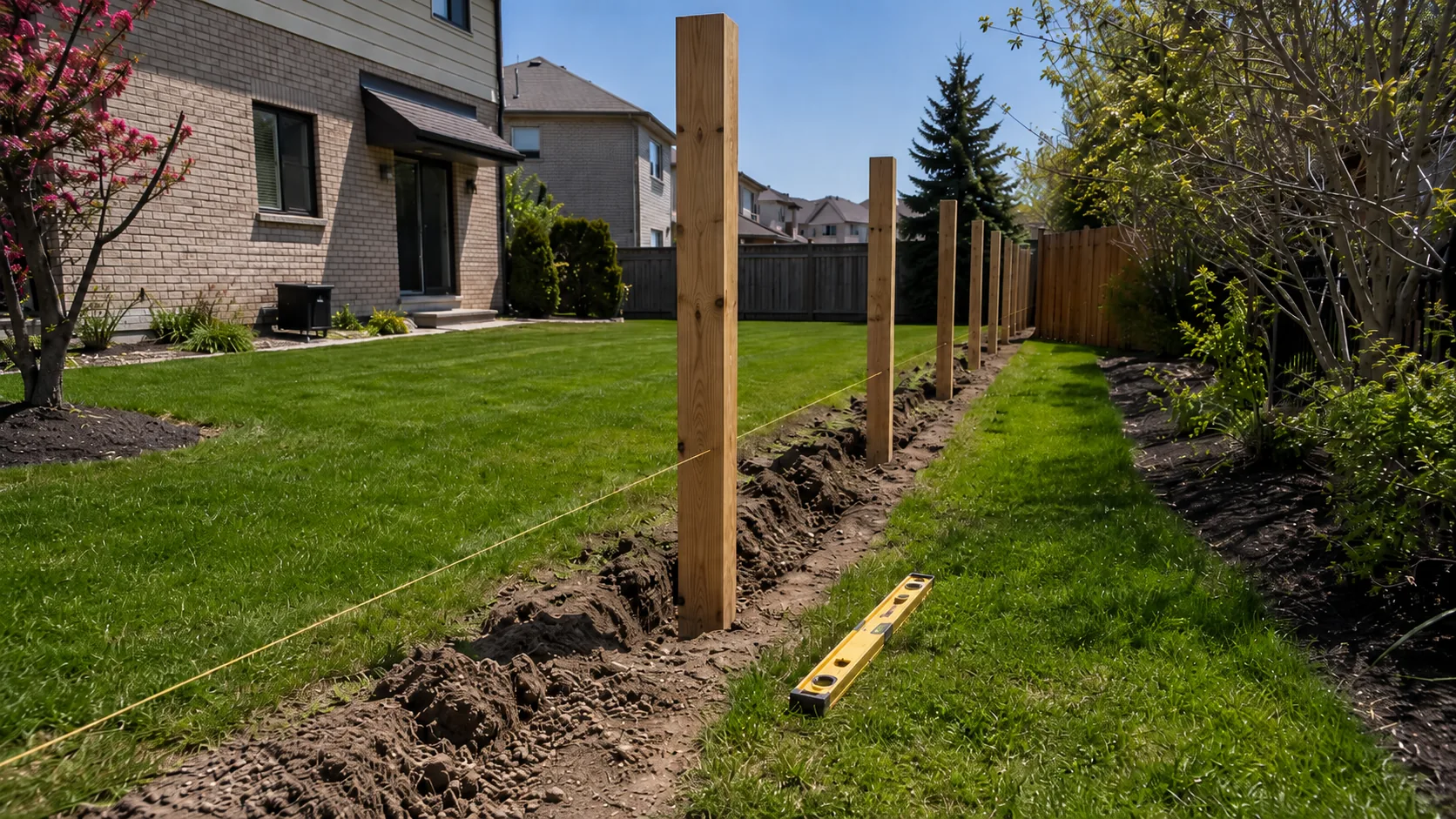
Whether you are considering a full fence replacement or repairing individual leaning posts after an Ontario winter storm, understanding local bylaws, proper material grading, and frost-depth engineering will save you thousands of dollars over the lifespan of your property.
Key Topics Covered in this Guide:
- Do You Need a Building Permit?
- How High Can a Fence Be?
- The Fence on the Property Line
- One Rule People Forget: Locates
- The Easy Way to Get It Right
Do you need a permit? How high can your fence be? Who pays when the fence sits on the property line? The rules every Ontario homeowner should know before building — in plain language.
Before you build a fence, three questions come up every time: Do I need a permit? How high can it be? And what about my neighbour? Here are the rules in plain language. One note before we start: fence rules are set by each municipality, so always check your local bylaw — but the pattern below is the same almost everywhere in Ontario.
Do You Need a Building Permit?
In most Ontario municipalities, a regular residential fence does not need a building permit. There is one big exception: pool fences . If the fence encloses a pool, you need a pool enclosure permit, and the fence must meet strict rules for height, gaps, and self-closing gates. If your project involves a pool, start with the permit — it decides the design.
How High Can a Fence Be?
Typical limits in Ontario municipalities look like this:
- Backyard: up to about 2 m (6.5 ft) in most cities.
- Front yard: much lower — usually 1 to 1.2 m, so the street stays visible.
- Corner lots: extra rules near the intersection. Fences must not block the sight lines of drivers, so the corner area often has a low height limit.
Build over the limit and the city can order you to cut down or remove the fence — after you have paid for it. Checking first is free.
The Fence on the Property Line
If the fence sits exactly on the line between two properties, it legally belongs to both neighbours, and Ontario's Line Fences Act applies. In practice, the best tool is not the law — it is a conversation. Talk to your neighbour before you build, agree on the style and the cost split, and put it in a short written note. Most disputes we see started with a fence that appeared without warning.
If you build the fence fully on your own side of the line, it is yours alone — your cost, your choice of style, your maintenance.
One Rule People Forget: Locates
Fence posts go 3–4 feet into the ground — right where gas and other utility lines can run. Before any digging, Ontario law requires utility locates through Ontario One Call. It is free and takes a few days. A professional installer orders the locates for you as a standard part of the job.
The Easy Way to Get It Right
We deal with local fence bylaws, pool enclosure rules, and locates every week — it is built into every quote. See our fence installation service or get a free estimate , and we will handle the rules for you.
Planning an Outdoor Project in Southern Ontario?
Get an instant online cost estimate tailored for Oakville, Burlington & GTA.